
About Steve Galloway
At a glance
- Founded ComStat in 2000
- Based in Ruthin, North Wales
- Supporting businesses across North Wales and the North West
- Experience from SMEs through to enterprise environments
- Microsoft 365, networking and business systems
- Web hosting/web server/website support
- Strong advocate for planning and documentation
- lifelong interest in how people and systems exchange information
My story
Click open the accordion sections below to find out more about how my background can help fix your problems and help you understand and manage your business systems more effectively.
How I Started in IT
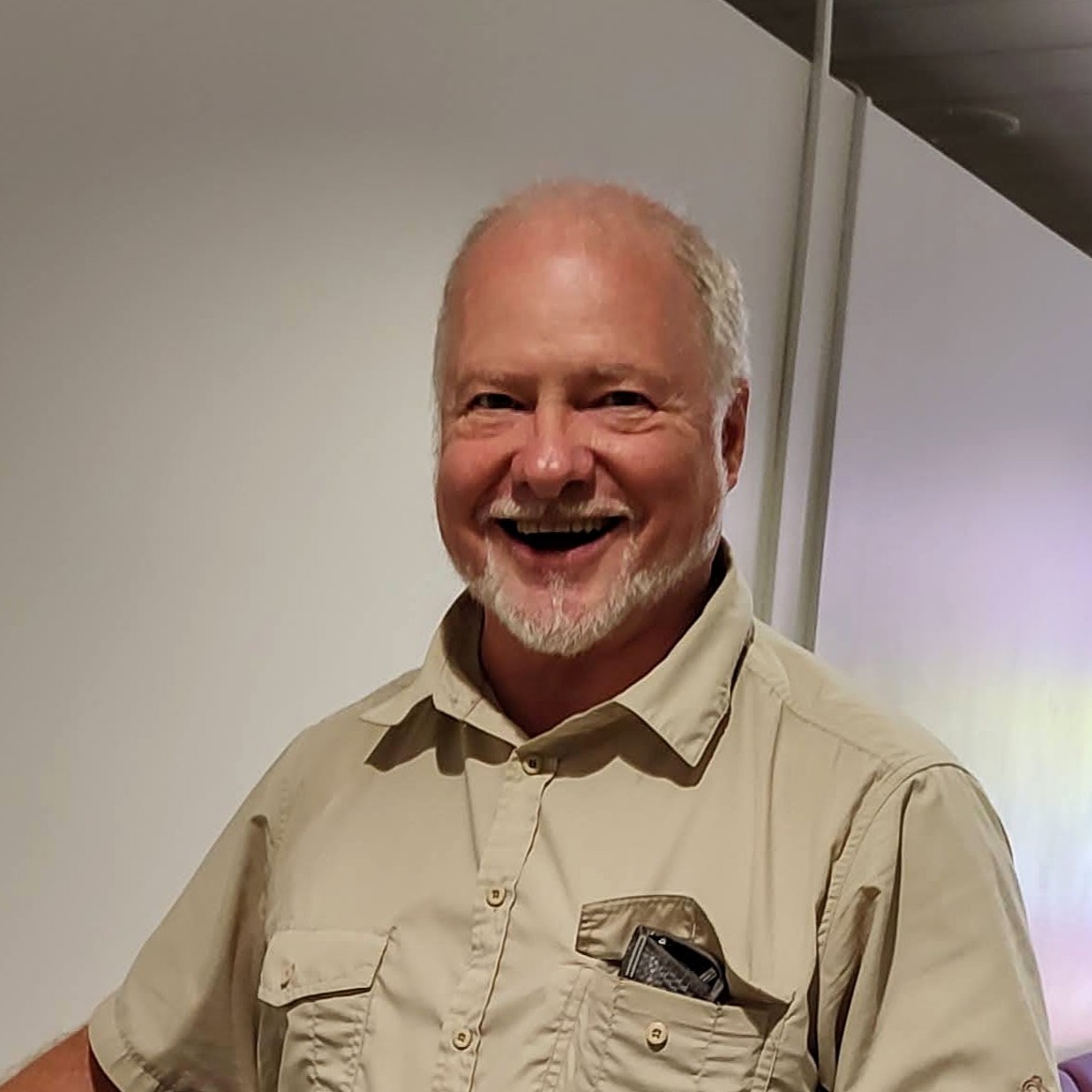
My name is Steve Galloway and I founded ComStat to help businesses get the same practical IT planning, troubleshooting and documentation normally associated with much larger organisations.
My journey into IT was not a conventional one.
In the late 1980s I was a partner in an insurance brokerage operating in North Wales and Greater Manchester. As computers became increasingly important to everyday business, I discovered that I had a natural aptitude for understanding how they worked. What began as maintaining a handful of PCs soon evolved into managing networks across offices, business software and communications systems for a growing organisation.
An engineer I had called out to investigate a problem once gave me a piece of advice that changed the direction of my career:
You should take a course.
I did.
That advice eventually led to professional networking and computing credentials, the launch of my own IT business in 2000, and a career spanning everything from small office networks to corporate infrastructure projects.
Experience from both sides of the desk
One of the advantages of starting as a business owner rather than an IT engineer is that I understand the frustrations businesses face when technology stops working.
I know what it feels like to be told an expensive replacement is the only solution when budgets are tight.
After establishing my business within a North Wales Internet Service Provider's "campus", I learned how networks, broadband services and support operations function behind the scenes. I gained experience from both sides of a desk: on one side, a frustrated owner trying to keep a business running, and on the other side of the desk an engineer responsible for solving the problem.
That balance remains central to how I work today.
Corporate Projects and Wider Experience
Since 2000 I have worked with organisations ranging from local businesses and home offices to major enterprises.
My experience includes:
- Business networks and Microsoft environments
- Broadband and connectivity solutions
- Web server deployment and management
- Remote working/desktop technologies
- Microsoft 365 deployment and administration
- web site and eCommerce project management
- Documentation and business process improvement
- Fault diagnosis and systems recovery
- Project management and technology planning
During the early expansion of broadband services across the UK, I delivered connectivity solutions for businesses operating in locations where conventional services were unavailable.
Later assignments included work supporting enterprise environments and outsourced data-centre operations serving hundreds of users.
What I've Learned About Technology
Nobody knows everything. Especially in IT: technology changes too quickly for that.
AI helps with tasks like drafting, organising information and exploring ideas. AI alone does not replace experienced hands, though. It can't ask the question it needs to get the answer it has - somewhere.
A good IT engineer analyses a problem and then ask the right questions to find that answer. Experience counts.
"I didn't change anything"
I still remember a case I was called to where an entire business network of about a hundred machines was intermittently failing.
The problem did not pivot on a suspected complex server fault but a newly installed printer that had been configured in a way that conflicted with the network. The problem was baffling expert consultants. Every time the problem happened, the organisation's systems ground to a halt. Things were getting toasty at the poor manager's desk.
Find what did change first
Staff said nothing had changed that might cause the problem. The server experts took this at face value. This is actually the first challenge: find out what did change, because computers do not change themselves.
This was a typical "we didn't do anything" call out, so a quick trip to "accounts" to scour invoices turned up a 3-week old £100 printer nobody thought was important. On the contrary, the printer crashed the network every time it was turned on. The problem itself was remedied with a couple of clicks.
This typical example happened before AI. Likely, the server experts would have found the problem after burning more time looking the wrong way, They were capable. Like AI, though, they did not know what question to ask, and then test. You cannot know everything. You just need to know where to look to get your answer.
Know your client
So, old fashioned "Know Your Client" (KYC) is still relevant in both financial services and IT. KYC trumps even AI, and ironically I have more work today because of problems AI introduces: it returns answers, but so often the questions posed are wrong in the first place. This leads to yet more problems. With AI at my side though, I can accomplish a lot more than I imagined I ever could.
Experiences like this reinforce something I tell clients regularly: effective IT support is often less about technical wizardry and more about methodical management and documentation ...and better still, knowing your client.
Why I founded ComStat
Technology has fascinated me for as long as I can remember.
As a child I lived on Florida's Space Coast watching Apollo moon launches. I wondered how so many people in white short-sleeved engineers at Mission Control communicated with spacecraft hundreds of thousands of miles away. I went home from school to Star Trek every day, too, and marvelled at Jim Kirk's (usually) flawless computer.
It took three decades to realize the question that drove me was:
How do two computers talk to each other?
Well, once you know how two computers can converse, you know how the rest of the Internet can talk too. Decades later, I am still fascinated by solving challenges.
What motivates me is helping people improve the technology they use to work more effectively. Whether that might be improving Microsoft 365 security, resolving a persistent network problem, or helping a business streamline an everyday process on their website shopping cart, I enjoy finding practical solutions that make life easier.
How I work today
Based in Ruthin, North Wales, I support businesses throughout North Wales, Cheshire, the North West and further afield. In the North West I operate from Bolton.
My focus is not simply fixing faults but helping organisations understand their systems, reduce risk, and improve reliability. Often, I help organisations learn their systems perform more than their horizon limits them to.
Document, document, document
One of the most valuable lessons I learned from larger corporate environments is the importance of good documentation. Corporate IT departments spend more time documenting what they did, than actually doing anything. At this point, IT becomes boring, and good IT is boring because it just works. Documentation is the answer.
In the field, IT is reactive - engineers are called to problems that were avoidable. Then, too often an engineer fixes a problem and disappears, leaving no record behind.
..and document again
More than half my time is taken understanding what the "last person" did. Businesses should be able to expect transparent support, and a job report is the first step towards good record keeping.
So, I document what I do for clients and why. This gives clients a clear record of their systems and often helps them avoid future support costs.
Technology works best when the people using it understand it.
That philosophy continues to guide everything I do at ComStat.