Website Design for AI Search: Why Good Design Is No Longer Just About Appearance

Website Design for AI Search: Why Good Design Is No Longer Just About Appearance

For many years, website design was often judged by appearance alone.
Business owners focused on colours, logos, banners and layouts. If a website looked modern and professional, it was considered successful.

Good design still matters, but the way customers find and use websites has changed.

Today, visitors arrive from search engines, social media, mobile devices and increasingly from AI-assisted search tools. Many never see a website's home page at all.

As search behaviour evolves, Website Design for AI Search is becoming less about visual appearance and more about helping visitors find useful information quickly and confidently.

Click open the accordion sections below to find out web design is responding to users' needs. Estimated reading time: 4 - 5 minutes.

Customers No Longer Follow Predictable Paths

Until recently visitors started their voyage on a website's home page. From there, they would browse categories, read about the business and eventually view products or services.

Today, somebody searching online may arrive directly on:

  • A product page
  • A buying guide
  • A frequently asked questions page
  • An article
  • A customer case study

They may never visit the home page. This is because search engines are using AI search technologies to find more targeted information. By doing this, search engine users enjoy a better experience.

This means every page must work hard to inform, reassure and assist the visitor.

Good website design is no longer focused solely on creating an impressive first impression. It is about providing a useful experience wherever a visitor enters the site.

A Beautiful Website Cannot Replace Useful Information

In the past, a lot of website owners spent spend considerable time choosing colours, fonts and photographs or graphics. They would agonize over a web designer's recommendations. In small business situations, often an owner had no idea of the written content they wanted. So, designers often composed draft content as placeholders. Owners made do with that content.

Layout, colours, and graphics still matter..

However, customers - the people trying to find things - are usually trying to solve a problem rather than admire a design.

An artisan marketplace visitor may want to know:

  • Which materials are used?
  • How to confidently choose sizing?
  • Can a product be customised?
  • How long will delivery take?
  • How should the product be maintained?
  • Who made it?

If that information is difficult to find, even the most attractive website may fail to build confidence.

So, useful information helps customers make decisions. Modern website design for AI search anticipates this, because today's search engines need to find the answer for their user to save the user having to waste time finding it themselves. Content increasingly drives customer trust.

Trust Is Becoming a Design Feature

Traditionally, website owners have believed ther trust is often created through visual appearance.

That alone is not enough. Today, customers seek additional reassurance before purchasing.

Prospective buyers increasngly look for:

  • Detailed product information
  • Customer reviews
  • Artisan biographies
  • Care instructions
  • Contact details
  • Frequently asked questions

These elements are no longer simply content. In the past, some designers may even have warned that this kind of content was "bloat" that could affect web site speed.

Today, this expanded content is part of the overall user experience.

A well-designed website helps visitors answer their questions without unnecessary effort.

This is one reason why website design for AI search places increasing emphasis on clarity, transparency and expertise.

Mobile Visitors Are Now the Majority

Most website traffic now comes from smartphones and tablets.

This changes how websites should be designed.

A page that looks impressive on a large desktop monitor may be frustrating to use on a mobile phone.

Visitors expect:

  • Readable text
  • Clear navigation
  • Fast loading pages
  • Easy-to-tap buttons
  • Simple contact options
  • Accessibility for vision etc.
  • Rendering for users whop prefer browser :dark mode"

These forward facing elements confine choices for colour, sizing, and web page "behaviours".

For many businesses, creating a site that works well on mobile devices is far more important than adding visual effects or complex layouts for display on large desktop screens.

Knowledge Helps Customers and Search

So far, we have discussed how customers increasingly want answers before they buy.

This is creating new opportunities for artists, artisans and craftspeople. For instance, AI has usually indexed your web site and already has the answers your potential customers want - if the information is there. 

A website can include:

  • Product pages
  • Care guides
  • Buying guides
  • Workshop stories
  • Frequently asked questions (FAQ)
  • Artisan profiles

Together, these resources help visitors understand products and make informed decisions. While this sounds like an enormous additional workload, web site platforms include in-line AI engines to develop content and even images.

Also, web site theme developers like Elegant Themes who ComStat partners with, includes AI generators which are embedded in WordPress dashboards to write not just textual content but even web page layouts. 

Content still needs a human touch, but premium tools of this kind help establish expertise and trust with reduced effort.

A site that shares useful knowledge often provides more value than one that simply displays products.

Designing for People First

Some website owners worry about designing for search engines or AI systems. In reality, the best approach is usually much simpler.

Design for your customers. Ask yourself:

  • Can visitors quickly find what they need?
  • Are common questions answered clearly?
  • Is important information easy to locate?
  • Does the website build confidence?
  • Is the content genuinely useful?

The answers to these questions matter far more than following design trends. Useful, trustworthy information rarely goes out of fashion.

What This Means for Artisan Businesses

For artists, artisans and craftspeople, this shift can be good news.

Large retailers often have bigger marketing budgets and larger websites. However, independent artisans frequently possess deeper knowledge about their products and craft.

A website that communicates that expertise can become a powerful business asset. Customers increasingly want to know:

  • Who created the product
  • How it was made
  • Why particular materials were chosen
  • How it should be used and cared for

The artisan who answers those questions clearly may stand out from competitors who focus only on product listings.

Website Design Is Becoming Experience Design

The most successful websites of the future may not be the most visually impressive.

Instead, they may be the sites that make customers feel informed, supported and confident.

Design still matters.

Professional presentation always matters.

However, modern website design is increasingly concerned with providing knowledge, building trust and helping visitors make informed decisions.

That is true whether somebody arrives from Google, Bing, social media, an AI-assisted search tool or a recommendation from a friend.

Key Takeaways

Good website design is no longer judged solely by colours, images and layouts.

As online search evolves, businesses that combine attractive design with useful information, clear navigation and genuine expertise are likely to provide stronger customer experiences.

For artists, artisans and craftspeople, sharing knowledge may become one of the most valuable design decisions they can make.

Frequently Asked Questions
Is website appearance still important?
What is Website Design for AI Search?

Website Design for AI Search focuses on creating websites that help visitors find useful information quickly while demonstrating expertise, trust and credibility.

Do I need a complex website?

No. Most visitors prefer clear navigation, useful information and straightforward layouts over unnecessary complexity.

Why are FAQs becoming more important?

FAQs help answer common customer questions and make information easier to find before a customer contacts you.

Does every artisan need a blog?

Not necessarily. However, articles, guides and product stories can help demonstrate expertise and build trust with potential customers.

What is the most important design consideration today?

Helping visitors find useful information quickly and easily is often more important than visual effects or elaborate page layouts.

Summary

 This article discusses how web site design is becoming less about visual appearance and more about helping visitors find useful information quickly and confidently. See our related articles in this series:

Introduction: AI Search for Artisan businesses 

1. Building an AI-Friendly Artisan Store

2. Why Collective Knowledge Matters More Than Collective Selling for Artisans

3. Why Good Website Design Is No Longer Just About Appearance

About the Author

Steve Galloway is the proprietor of ComStat.uk, Based in Ruthin, North Wales, he provides Microsoft 365, WordPress, web hosting and IT support services across North Wales, the North West and beyond. Through ComStat's growing knowledgebase, Steve helps businesses understand how changing technology, AI-assisted search and modern website practices can improve visibility, customer engagement and long-term growth.  Find out more about Steve Galloway and his experience here.
 

Artisan Marketplace Success: Why Collective Knowledge Matters More Than Collective Selling

Why Collective Knowledge Matters More Than Collective Selling for Artisans

Marketplaces like Etsy are built around a simple idea: bring together products from multiple sellers, make them easy to browse and provide customers with a convenient place to buy. That approach has worked well for several years.

However, as online search continues to evolve, the most successful marketplaces offer something more valuable than products alone. Increasingly they may offer expertise.

For artists, artisans and craftspeople, this creates an opportunity to become part of a community that shares knowledge as well as products.

In an age of AI-assisted search, collective knowledge may become far more important than collective selling.

Click open the accordion sections to browse this article. Estimated reading time: 3-4 minutes.

A Marketplace Is No Longer Just a Place to Buy

When customers first visit an artisan marketplace, they may be looking for a product. What they often need, however, is information.

Consider somebody searching for a handmade wool blanket. Before making a purchase, they may wonder:

  • What kind of wool works best?
  • How should it be cleaned?
  • Is it suitable for allergy sufferers?
  • How long should it last?
  • Can it be made to a custom shape or size?

The same applies to furniture, ceramics, textiles, jewellery and many other handcrafted products.

Customers frequently want answers before they are ready to buy. A marketplace that helps answer those questions provides value long before a sale takes place.

Why Expertise Matters

Artisans are perhaps unique in commerce - each develops specialist knowledge through years of experience.

  • A ceramic artist understands glazing and firing techniques.
  • A furniture maker understands timber selection and finishing methods.

This knowledge helps customers make informed decisions. That information might be in a brochure or A4 sheet, but unfortunately much of that expertise never appears online.

An AI-Friendly Artisan Store does more than display products. It explains the knowledge behind them. It explains the knowledge behind them. It becomes a trusted source of information.

Building a Knowledge Community

Imagine a marketplace where artisans contribute articles, guides and practical advice alongside their products. A textile artisan might explain:

  • How to care for wool products
  • The differences between natural and synthetic fibres
  • Choosing the right fabric for a particular purpose

A ceramic artisan might share information about:

  • food-safe pottery
  • caring for handmade ceramics
  • Understanding glazing techniques

A furniture artisan might provide guidance on:

  • Selecting hardwood furniture
  • Protecting wooden surfaces
  • Maintaining traditional finishes

Each contribution helps customers gain confidence. At the same time, every article strengthens the marketplace as a whole.

The result is a growing knowledge resource that benefits every participating artisan.

Why This Approach Is Different

Most online marketplaces focus on transactions. Their primary goal is helping customers find products and complete purchases. There is nothing wrong with that model. However, it means that many marketplaces compete on similar terms.

They focus on:

  • Product listings
  • Pricing
  • Advertising
  • Promotions
  • Search filters

A knowledge-centred marketplace takes a different approach.

Instead of asking:

What would you like to buy?

It also asks:

What would you like to learn?

This difference may seem small, but it can have a significant impact on how customers discover and trust artisans.

Beyond Etsy and Similar Marketplaces

Platforms such as Etsy, Folksy and Not On The High Street have helped artisans reach wider audiences. Until now, they have dominated the market. 

These platforms have demonstrated that customers value handmade and independently produced products. However, their primary purpose is to connect buyers and sellers.

A knowledge-centred artisan marketplace goes further. Rather than offering only products, it can also offer:

  • Artisan expertise
  • Product education
  • Care guides
  • Buying advice
  • Background stories
  • Specialist knowledge

This creates a richer experience for customers and a stronger platform for participating artisans. Instead of simply joining another online marketplace, artisans become part of a recognised community of expertise.

That distinction may become increasingly important as customers rely more heavily on AI-assisted search and recommendation tools.

Every Artisan Helps Every Other Artisan

One of the greatest advantages of collective knowledge is that everyone benefits.

A customer may land on your website to read an article about caring for handmade ceramics. While exploring the site, they may discover a local textile artisan.

Someone researching furniture finishes may later purchase handcrafted lighting. So, not every site visitor follows a direct path to a purchase.

Useful information helps people discover products and artisans they might never have found otherwise. This means that each contribution strengthens the visibility of the marketplace as a whole.

Content as Customer Service

Business owners tend to think of articles and guides as marketing. Increasingly, they are becoming a form of customer service. Every useful answer published online helps somebody solve a problem. Online answers and content can:

  • answer a question before an enquiry is made.
  • remove uncertainty before a purchase.
  • help a customer choose between different options.

Most importantly, comprehensive supporting information helps build trust. Trust is often one of the deciding factors when customers choose handmade products.

Preparing for the Future

As online search continues to evolve, customers are increasingly seeking guidance rather than simply lists of products. Artisans already possess the knowledge customers need.

A marketplace that encourages artisans to share that knowledge can become far more valuable than one that only hosts product listings. For artists, artisans and craftspeople, collective knowledge creates opportunities that extend beyond individual sales:

  • visibility
  • trust
  • authority

Most importantly, it helps create a community where expertise becomes one of the marketplace's greatest strengths.

Frequently Asked Questions
Does every artisan need to write articles?

No. Even a small contribution, such as a product care guide or a short explanation of your techniques, can provide value to customers. However, good content always helps to build a case that attracts interest from AI search bots.

Won't customers just read the information and leave?

Some will. However, many customers begin with research before making a purchase. Useful information often creates trust and encourages future sales.

Why is expert knowledge becoming more important?

Customers are increasingly looking for detailed answers to specific questions. Expertise helps them make confident purchasing decisions.

How does this benefit smaller artisans?

A shared knowledge resource allows artisans to benefit from content created across the entire marketplace rather than relying solely on their own website.

Is this replacing traditional selling?

No. Products remain central to the marketplace. The difference is that expertise and education become part of the customer journey.

What makes this different from other artisan marketplaces?

Many marketplaces focus primarily on transactions. A knowledge-led marketplace also focuses on expertise, helping customers learn, compare and make informed decisions before they buy.

Summary

Today, online shops are as much about demonstrating expertise and building customer confidence rather than conventional product, price, and description models.  Information about professional background, materials used, how products are made, and after sales care all help to build a broader picture that helps to connect traders to buyers. Other articles in this series:

Introduction: AI Search for Artisan businesses 

1. Building an AI-Friendly Artisan Store

2. Why Collective Knowledge Matters More Than Collective Selling for Artisans

3. Why Good Website Design Is No Longer Just About Appearance


About the Author

Based in Ruthin, North Wales, Steve Galloway helps businesses improve reliability, productivity and security through practical IT support, Microsoft 365 expertise, web server and web hosting support, troubleshooting and documentation. Find out more about Steve Galloway and his experience here.

AI-Friendly Artisan Stores: Beyond Products and Prices

AI-Friendly Artisan Stores: Beyond Products and Prices

A beautiful online shop is still important. However, as online search evolves, product photographs and prices alone may no longer be enough.

Customers increasingly use AI-assisted search tools to help them research products before making a purchase. Rather than searching for "handmade wool blanket", they may ask detailed questions about materials, durability, care requirements or custom options.

This creates a valuable opportunity for artists, artisans and craftspeople.

An AI-Friendly Artisan Store does more than display products. It helps visitors understand your expertise, your methods and the value behind your work. 

Click open the accordion sections to browse this article. Estimated reading time: 3-4 minutes.

Customers Are Looking for Answers, Not Just Products
Imagine somebody searching for a dining table.
Twenty years ago, they might have searched:
Oak dining table North West 
Today, that same customer could just as easily ask:
I need a handmade oak dining table for a busy family home. Which type of finish is easiest to maintain?
The difference is significant.
The buyer is no longer simply looking for a product. They are looking for confidence, reassurance and expert guidance.
This is where independent artisans often have an advantage. You know:
  • How your products are made
  • Which materials are best suited to different uses
  • How products should be maintained
  • What customisation options are available
  • Common mistakes customers should avoid
That knowledge has value.
Your Expertise Is Part of the Product

Artisans spend years developing their skills. Yet surprisingly few explain that expertise on their websites.

An AI-Friendly Artisan Store should help customers understand:

  • Who you are
  • What you make
  • Why your products are different
  • How your products are created
  • How customers can get the best results

Customers usually buy from people they trust.

Sharing your knowledge helps establish that trust long before a purchase is made.

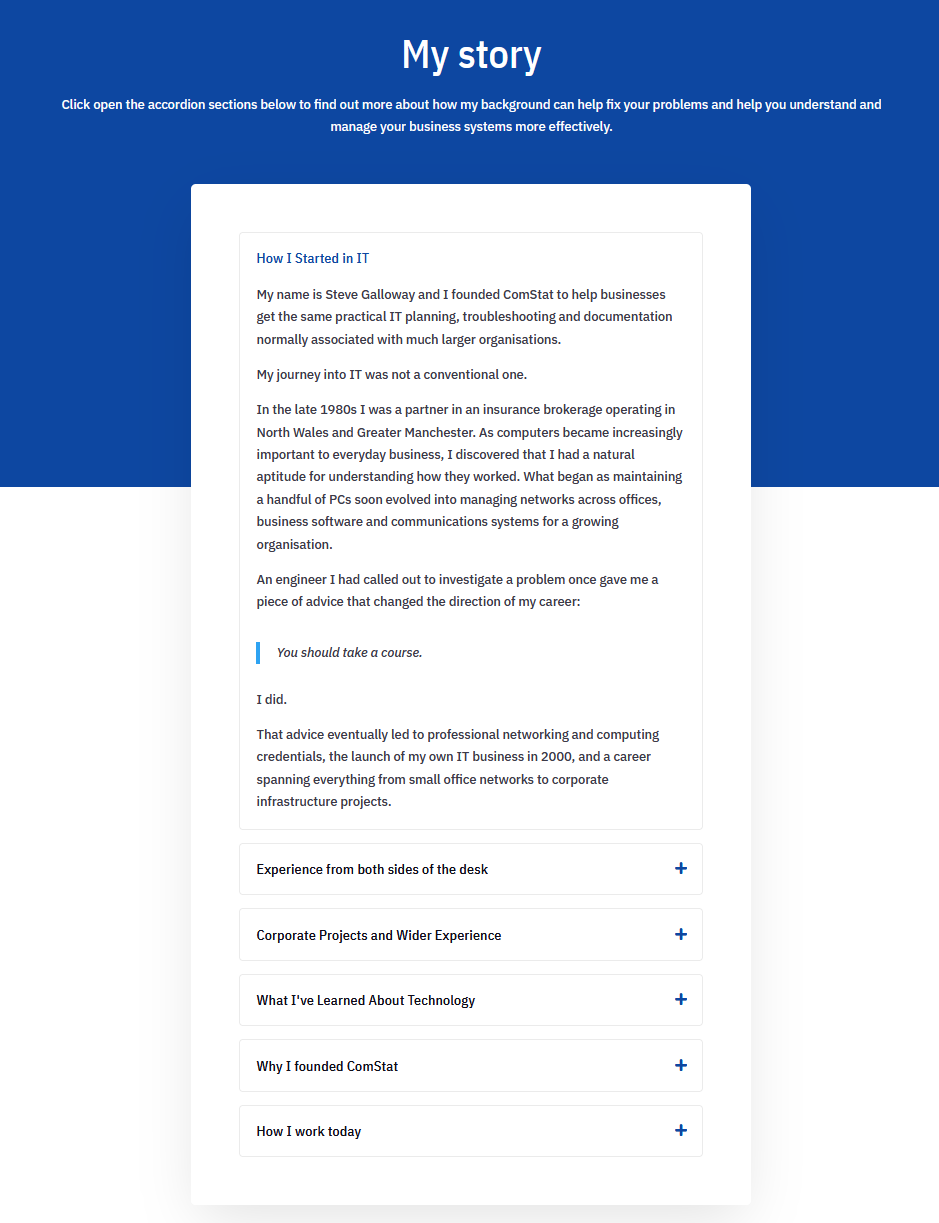
Start with an About the Artisan Page

One of the most valuable pages on an artisan website is often the one that receives the least attention.
Your About the Artisan page should tell your story and help customers connect with the person behind the products.


Your Background

Consider explaining:

  • How you learned your craft
  • How long you have been developing it
  • Any specialist training, qualifications or memberships
  • What inspired you to start your business


Your Workshop

Customers are often fascinated by how handmade products are created. You might include:

  • Where you work
  • How your products are made
  • The tools and techniques you use
  • The materials you prefer and why


Your Values

Modern customers increasingly want to know what a business stands for. For example:

  • Sustainability
  • Local sourcing
  • Traditional craftsmanship
  • Ethical production
  • Quality over mass production

These details help potential customers understand not only what you make, but also the care and thought that goes into every item.

A well-written artisan profile does more than introduce your business. It demonstrates expertise, builds trust and helps customers feel confident that they are buying from a genuine craftsperson rather than an anonymous online retailer.

About page screenshot for AI friendly stores


Why This Matters

When somebody asks an AI assistant to recommend a product, it is often looking for signs of expertise and credibility.

An artisan with a detailed profile, clear information about their methods and evidence of their experience is likely to stand out more than a store containing only product photographs and prices.

In short, the story behind your craft can become one of your most valuable marketing assets.

Tell the Story Behind Your Products

Many websites contain little more than a product name, price and photograph. 

That may not fully answer a customer's questions. It does not help an AI search robot gauge suitability for a potential buyer's query.


gingham cloth for AI friendly artisan stores

Gingham, yes, but is it a durable polyester/cotton blend? What dimensions are available? What gauge is the pattern? Is it breathable and machine washable? Is it good for dresses, or better for decor? The more you describe, the better AI can help buyers find you.


Instead, consider explaining:

  • The materials used
  • How long production takes
  • Why specific techniques are chosen
  • Available customisation options
  • Suitable uses for the product

For example, rather than saying:

Handmade ceramic mug

You might say:

Handmade stoneware mug created using traditional wheel-throwing techniques and fired at high temperatures for everyday durability.

An expanded description like this helps AI search bots match your products to a search query. In this way, AI can connect you to buyers so that customers make informed decisions about supliers who demonstrate expertise.

Frequently Asked Questions Save Time

A good FAQ page can answer questions before customers need to contact you.

Common questions might include:

  • Do you offer custom sizes?
  • How long will delivery take?
  • Do you accept commissions?
  • Which materials do you use?
  • Can products be repaired?
  • Are your products suitable for outdoor use?

A well-written FAQ can improve the customer experience while reducing repetitive enquiries.

Think Beyond the Product Page

Successful artisan websites increasingly act as small knowledge centres.

Alongside products, consider publishing:

  • Buying guides
  • Care instructions
  • Behind-the-scenes articles
  • Workshop news
  • Seasonal advice
  • Commissioning guides

Every article is another opportunity for customers to discover your expertise.

The goal is not simply to sell products.

The goal is to become recognised as a trusted authority within your craft.

Preparing for the future

As AI-assisted search becomes more common, businesses that share useful information may become easier for potential customers to discover.

Fortunately, most artisans already possess the knowledge required to bring their content in line with AI's evolviong approach to search. 

The challenge is simply presenting that knowledge online.

An AI-Friendly Artisan Store is not about technical expertise or complicated marketing strategies.

It is about explaining your craft, sharing your experience and giving customers confidence in the products you create

For many artists, artisans and craftspeople, that may be one of the most effective forms of marketing available.

Frequently Asked Questions
What is an AI-Friendly Artisan Store?

An AI-Friendly Artisan Store is an online shop that combines products with useful information such as artisan profiles, product stories, care guides and FAQs.

Do I need technical skills to create one?

No. Most of the content can be created simply by sharing knowledge you already have about your craft and products.

Do customers really read this information?

Many do. Customers often want reassurance before purchasing, especially when buying handmade or bespoke items. Importantly, AI search bots do, and the research they compile before a search question is even asked helps connect potential buyers when they ask.

Should every product have a story?

Not necessarily. However, explaining materials, methods and unique features can help customers understand the value of your work.

How often should I publish new content?

Consistency is more important than volume. Even one useful article each month can gradually build trust and authority.

Is this only useful for online sales?

No. Helpful content can also encourage enquiries, commissions, workshop bookings and visits to physical events or markets.

Summary

Today, online shops are as much about demonstrating expertise and building customer confidence rather than conventional product, price, and description models.  Information about professional background, materials used, how products are made, and after sales care all help to build a broader picture that helps to connect traders to buyers. Other articles in this series:

Introduction: AI Search for Artisan businesses

1. Building an AI-Friendly Artisan Store

2. Why Collective Knowledge Matters More Than Collective Selling for Artisans

3. Why Good Website Design Is No Longer Just About Appearance

 About the Author

Based in Ruthin, North Wales, Steve Galloway helps businesses improve reliability, productivity and security through practical IT support, Microsoft 365 expertise, web server and web hosting support, troubleshooting and documentation. Find out more about Steve Galloway and his experience here.
AI Search for Artisan Businesses: How North West Artisans Can Be Found by Tomorrow’s Customers

AI Search for Artisan Businesses: How North West Makers Can Be Found by Tomorrow's Customers

When people wanted to buy something online, they would usually start with Google or Bing. They might search for handmade pottery North West or made-to-measure gingham tablecloth UK and browse through a list of websites until they found a supplier.

Today, the way people search is beginning to change.

Increasingly, buyers are turning to AI assistants and chat-based search tools. Instead of typing a few keywords, they are asking detailed questions and looking for recommendations tailored to their needs.

This change creates exciting opportunities for independent artists, makers and craftspeople.

For those who sell unique or bespoke products, AI search for artisan businesses could become a powerful way to reach new customers.

Click open the accordion sections to browse this article. Estimated reading time: 3-4 minutes.

How AI Search Is Different

Traditional search engines match a search term with a web page.

AI systems try to understand what the customer is trying to achieve.

For example, someone looking for a tablecloth might ask:

I need a made-to-measure red gingham tablecloth for an oval farmhouse table. I'd prefer cotton and I'd like a local supplier who can accommodate unusual sizes.

Rather than listing thousands of websites, an AI assistant may recommend businesses that appear knowledgeable, trustworthy and capable of meeting those specific needs - in one answer.

This means customers may discover makers based on:

  • Expertise
  • Vicinity
  • Reviews
  • Product knowledge
  • Customisation options
  • Sustainability information
  • Aftercare guidance
  • Reputation

This is good news. Large retailers are not always the best at providing specialist knowledge, whereas makers often have years of experience and genuine expertise.

However, this means writing content that AI can capture, too. This seems daunting, but AI can be used to recommend and streamline text. Also it can optimize content for AI search optimisation. Modifying the way products are advertised on your site this way can take surprisingly little time.

Why a Shared Marketplace Makes Sense

Talented craftspeople face the same challenge. They are excellent at what they create but may have limited time for marketing, website management or online promotion.

So, a shared marketplace allows independent traders to benefit from being part of a larger community.

Instead of dozens of small websites competing for attention, a collective marketplace can become a trusted destination where customers discover:

  • Handmade products
  • Local makers
  • Specialist skills
  • Bespoke services
  • Regional craftsmanship

As more makers contribute knowledge and products, the marketplace becomes more valuable to both customers and AI systems.

This is one of the reasons why AI search for artisan businesses may favour knowledgeable communities rather than isolated websites.

Looking Ahead: Building Stores for the AI Age

The next generation of online stores may look different from those built in the past.

Success will depend not only on product listings but also on useful information that helps customers make informed decisions.

A successful artisan store may include:

  • Information about the maker
  • Product care guides
  • Articles explaining materials and techniques
  • Frequently asked questions
  • Custom ordering information
  • Workshop stories and photographs
In many cases, the knowledge surrounding a product may become almost as important as the product itself. Fortunately, AI can be capitalised on to minimize time needed to showcase products for ever targeted searches.
Related Articles in This Series

To help traders prepare for the future, we will explore these topics in greater detail:

1. Building an AI-Friendly Artisan Store

Learn how maker profiles, FAQs, product stories and care guides can improve visibility in AI-driven search results.

2. Why Collective Knowledge Matters More Than Collective Selling

Discover how a marketplace can become a trusted source of expertise and attract customers looking for specialist products.

3. Why Good Website Design Is No Longer Just About Appearance

Understand why useful content, trust and mobile accessibility often matter more than graphics and layout alone.

What This Means for Arts and Crafts in the North West

The evolution towards AI-driven search does not mean traditional websites are disappearing.

It does mean that businesses may need to think differently about how they present themselves online.

Customers increasingly want answers, expertise and confidence before they buy.

Artists and craftspeople are often well placed to provide exactly that.

Those who share their knowledge, explain their processes and demonstrate their experience may have an advantage as online search continues to evolve.

For independent arts and crafts across the North West, this presents an opportunity not just to sell products, but to become recognised experts in their field.

Frequently Asked Questions
Is AI search replacing Google?
Not entirely. Search engines remain important, but AI assistants are increasingly helping people research products, services and suppliers before they make a purchase.
Do I need technical knowledge to benefit from AI search?
No. The most important step is providing helpful information about what you make, how you make it and how customers can use or care for your products. Indeed, our web site software can help you write this kind of content to suit AI oriented searches.
Will customer reviews become more important?

Yes. Reviews help build trust and can help customers understand whether a maker is reliable and experienced.

Do I need to write lots of content?

Not necessarily. A few well-written pages about your products, materials, techniques and background can be more valuable than dozens of short pages with little useful information.

Can a small craft business compete with large retailers?
Often, yes. Independent makers can offer expertise, bespoke services and specialist knowledge that larger retailers may struggle to provide.
What happens when officers change?

The easiest systems to hand over are usually The Events Calendar and Eventbrite because they require little technical knowledge and have widely available documentation. As long as an authorised officer can log into PayPal, "Buy Now" buttons can be duplicated and edited with revised dates, price, and ticket stock limit.

What is the biggest opportunity for artisans?
The biggest opportunity is demonstrating expertise. AI systems increasingly favour detailed, useful information that helps customers solve a specific problem or make a confident buying decision.

Summary

The biggest opportunity for arts and crafts businesses in the North West is demonstrating expertise. AI systems increasingly favour detailed, useful information that helps customers solve a specific problem or make a confident buying decision. Find out more about how to accomplish this in these articles:

About AI Search for Artisan businesses: 

1. Building an AI-Friendly Artisan Store

2. Why Collective Knowledge Matters More Than Collective Selling

3. Why Good Website Design Is No Longer Just About Appearance

About the author

Based in Ruthin, North Wales, Steve Galloway helps businesses improve reliability, productivity and security through practical IT support, Microsoft 365 expertise, web server and web hosting support, troubleshooting and documentation. Find out more about Steve Galloway and his experience here.
Event Ticket Software for WordPress: Choosing the Best Event Ticket System for Charities and Volunteer Organisations

Event Ticket Software for WordPress: A Practical Guide for Charities and Community Groups

Charities, museums, heritage organisations, and volunteer groups need a simple way to advertise events and sell tickets online. The challenge is finding event ticket software for WordPress that is affordable, easy to use, and still manageable when trustees, officers and volunteers change over time.

A ticket/reservation system needs be simple enough that a new trustee can learn it quickly without specialist technical knowledge.

This article examines four popular options and explains which organisations they are best suited to. Click open the sections below to browse our article.

What Should You Look for in Event Ticket Software?

When choosing event ticket software for WordPress, price matters, but it is not the only consideration.

A low-cost solution can become expensive if it requires hours of administration or ongoing support. Equally, a powerful system may offer features that are never used. Some software like PayPal is free.

For most charities and community groups, the key requirements are usually:

  • Free, or low ongoing costs
  • Easy event creation
  • Online ticket sales
  • Simple attendee management
  • Compatibility with WordPress
  • Minimal training requirements
  • Seamless handover for new officers
  • Long-term supplier stability

Bilingual options

If your website is bilingual, there is another consideration. Event descriptions should remain simple and clearly written so that translation services such as Google Translate can produce reliable 2nd language content, like Welsh.

Option 1: PayPal Payment Buttons

Best for:

  • Occasional ticketed events
  • Minimal technical knowledge required

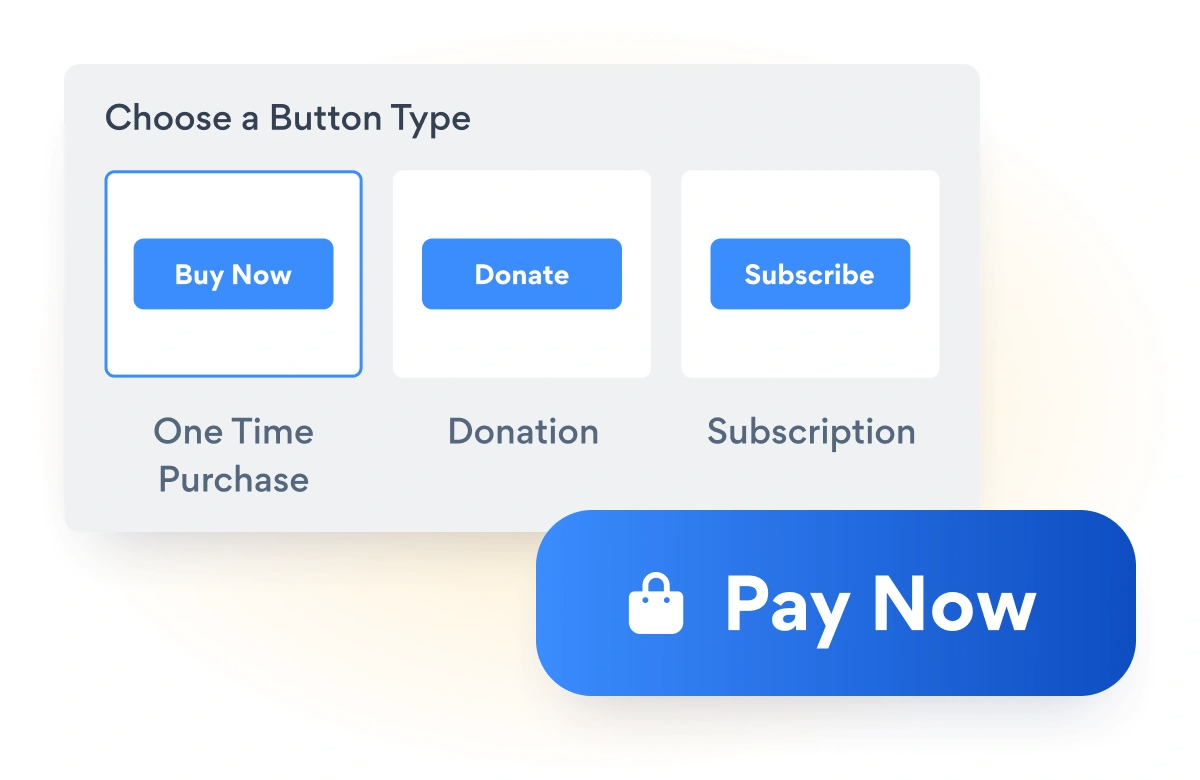
PayPal allows organisations to create payment buttons or payment links without installing a full e-commerce platform. A button can be placed directly on a WordPress page or post, allowing visitors to buy tickets online. PayPal states that its payment buttons can be created without a full shopping system or monthly subscription.

Paypal buttons can be configured and customnized in your PayPal portal and added to website pages or posts. PayPal deals with the shopping cart, so minimal deign skills are needed to added payments options to a web page or post.


UK Banking Laws and anti-fraud compliance

PayPal can accept money for you in a matter of minutes. PayPal is still subject to UK banking and Financial Services Laws. So, if you use a business bank account, be sure that you set up a PayPal business account, make sure that the account that you establish at PayPal precisely reflects the name of your organisation's bank account. Also, be sure to provide proof of ID etc. AND wait for PayPal's positive compliance checks before you start using the facility.

Advantages

  • Zero setup cost
  • No WordPress plugin or software needed
  • Simple to understand
  • No need for a complex shop
  • Accepts card payments as well as PayPal payments
  • point-of sale-options for door sales
    event sales limits
  • Easy for volunteers to maintain

Disadvantages

  • No event calendar
  • No post-sale attendee management
  • No automated ticket lists/reports
  • Poor scalability

Verdict

For organisations holding only a few annual events, PayPal remains a sensible starting point. Tickets can also be sold on the door and reconciled afterwards.

Option 2: Event Tickets and The Events Calendar

Best for:

  • Most charities and heritage organisations

The Events Calendar - Event Tickets is one of the most widely used event systems for WordPress, with hundreds of thousands of active installations. The free calendar plugin can publish events, while the companion Event Tickets plugin can manage registrations and ticket sales.

The software can connect directly to Stripe or PayPal and allows organisations to collect RSVPs or paid ticket bookings.

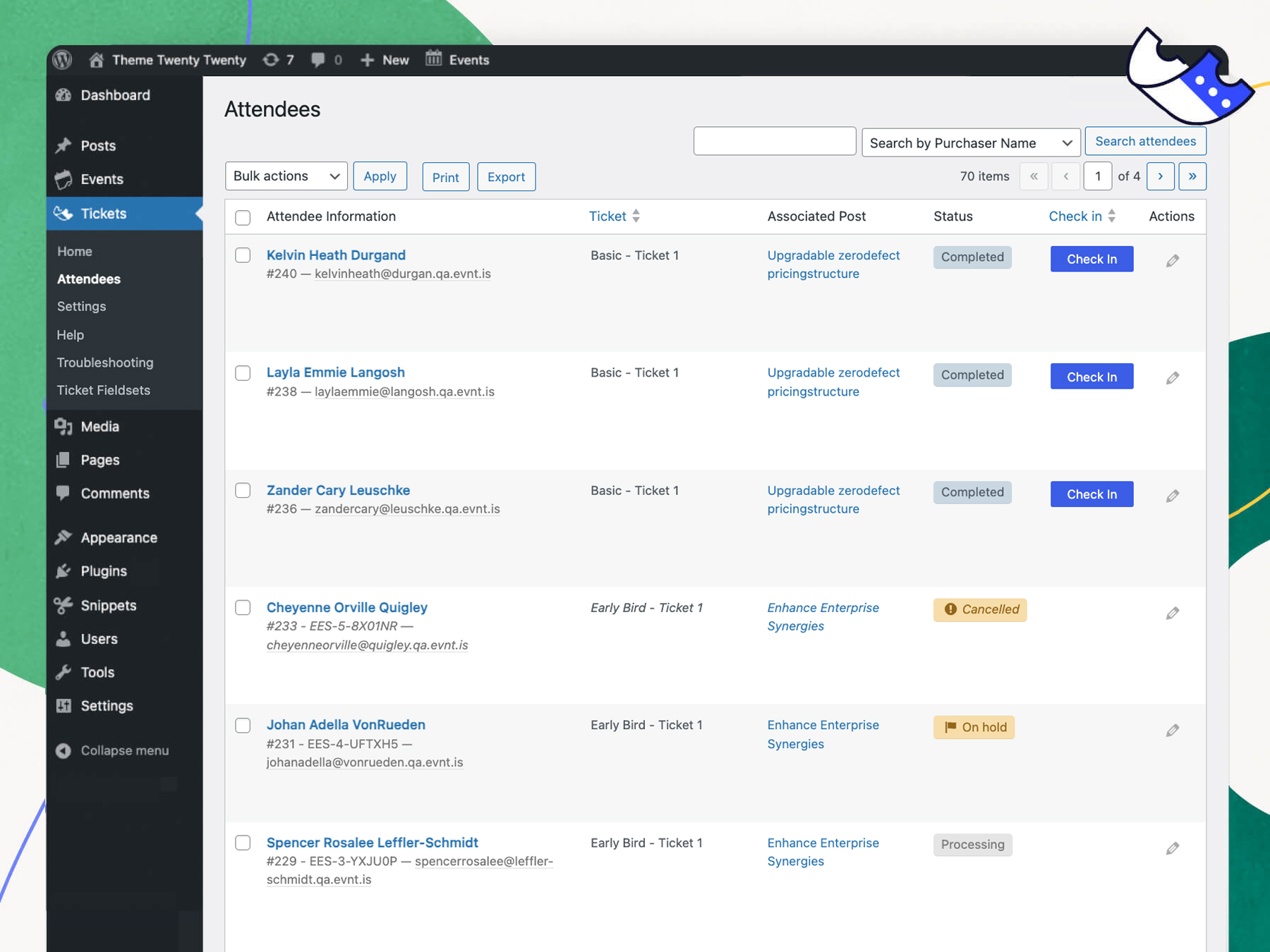
Event Tickets for WordPress

Customers can but tickets without leaving your site and the plugin provides attendee information

Advantages

  • Free entry-level version
  • Runs completely within WordPress
  • Easy event creation
  • Good compatibility with WordPress themes
  • Ticket sales and attendee management
  • Large user community
  • Well-established supplier

Disadvantages

  • Advanced ticket features require paid upgrades
  • Some configuration may require technical assistance

Verdict

The Events Calendar - Event Tickets is probably the strongest overall option. It strikes an excellent balance between cost, usability, and functionality

Option 3: Event Espresso

Best for:

  • Organisations running regular paid events

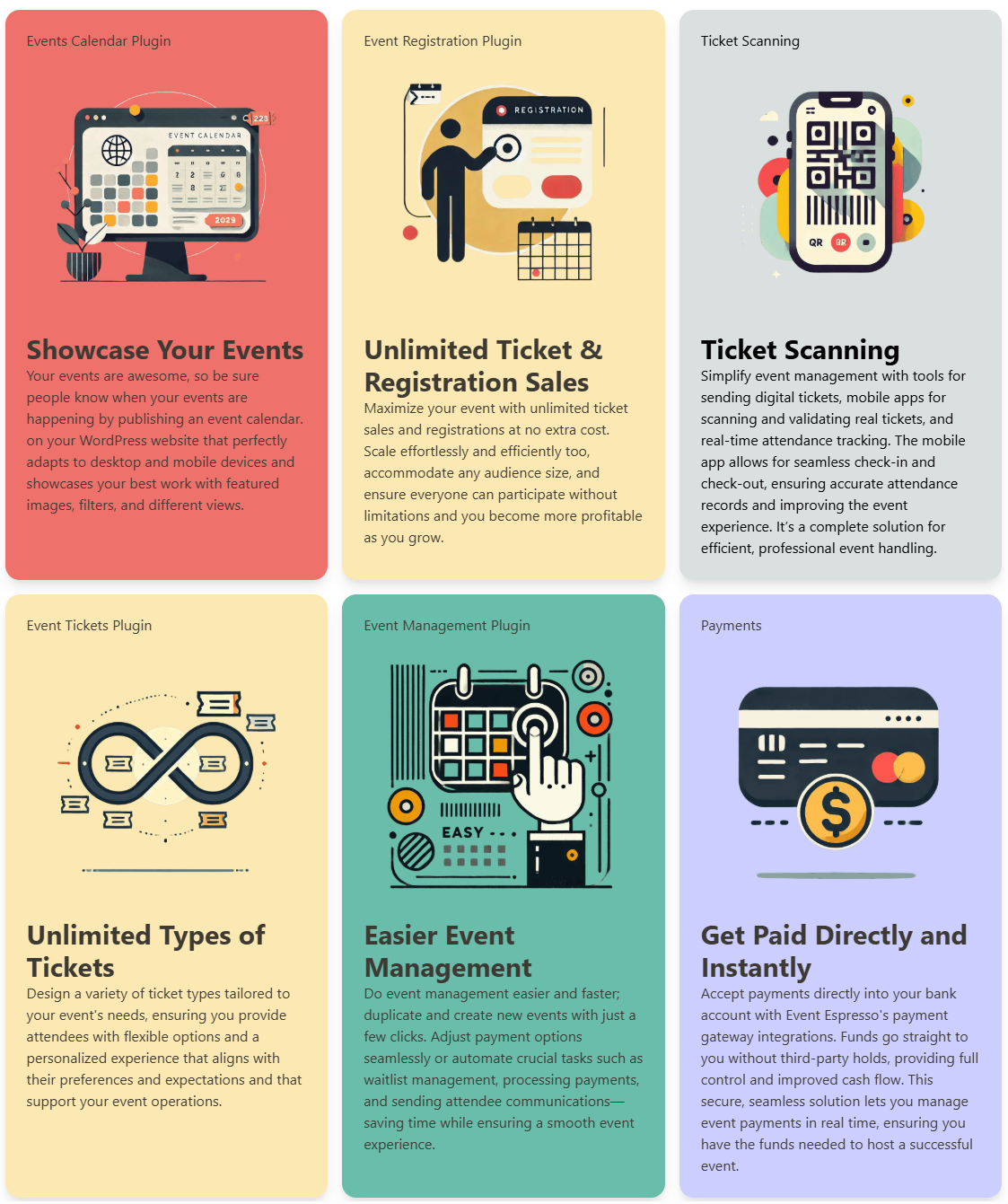
Event Espresso is a specialist WordPress event registration system designed specifically for ticket sales and attendee management within WordPress. It supports paid tickets, free tickets, automated emails, attendee lists and PayPal integration.

Unlike ticket marketplaces, Event Espresso keeps sales and attendee information inside the organisation's own WordPress website. The supplier also emphasises that it does not charge per-ticket commission fees.

event espresso

Event Espresso provides extensive functionality from within WordPress, but may be more than organisations with minimal events need.

Advantages

  • Comprehensive attendee management
  • Multiple ticket types
  • Automated confirmations
  • No commission charged per ticket by the platform
  • Data remains within the organisation's website

Disadvantages

  • More complex than needed for occasional events
  • Greater learning curve for volunteers
  • Premium features require annual licensing

Verdict

Event Espresso is an excellent product, but perhaps more powerful than most community organisations require.

Option 4: Eventbrite

Best for:

  • Organisations seeking maximum simplicity

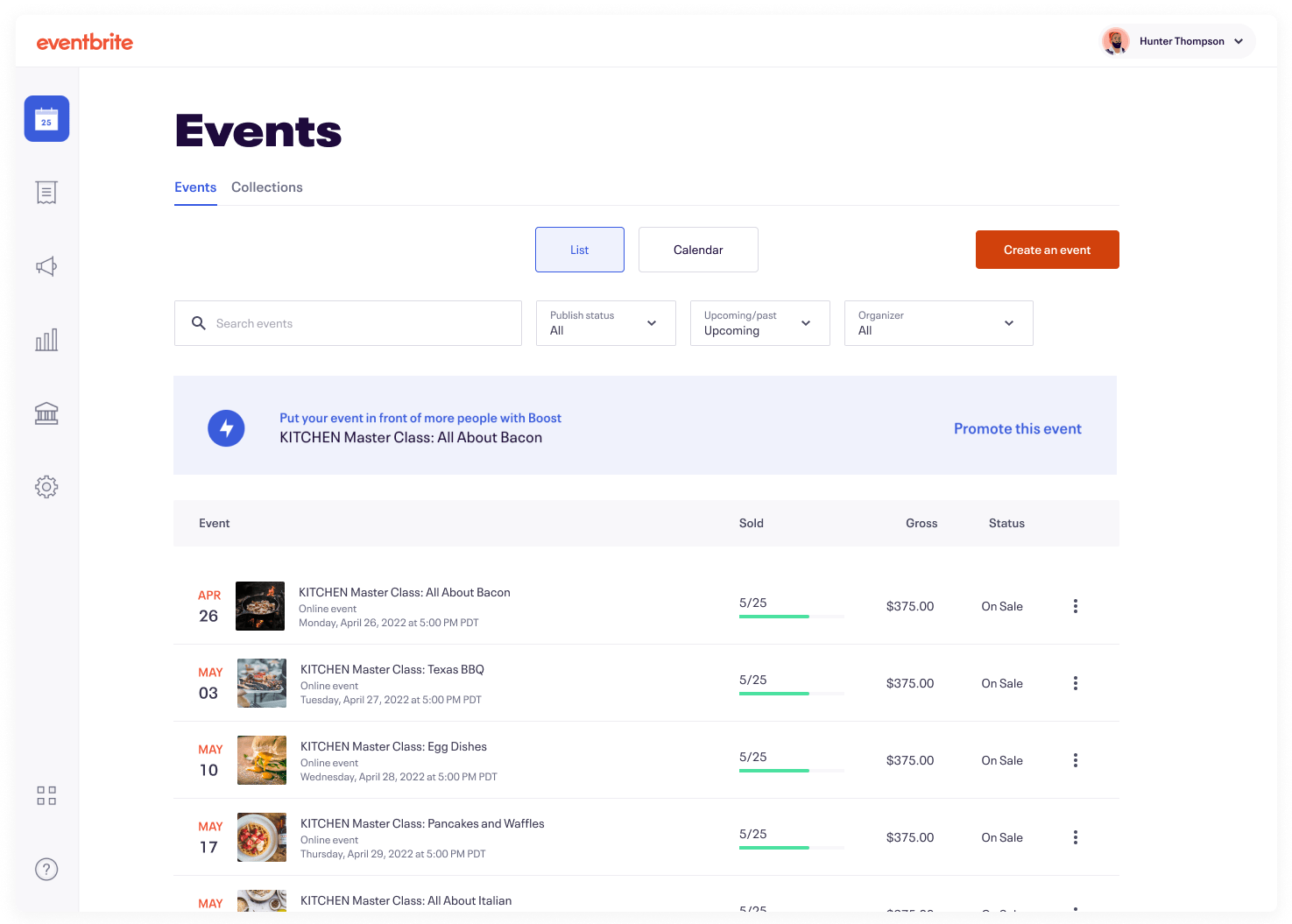
Eventbrite is one of the world's best-known ticketing platforms. Events are created on the Eventbrite platform and can then be linked from the organisation's website. Ticket buyers would be directed to Eventrite's correspondong event page where you have configured pricing and availability. Eventbrite provides event promotion, online payments, attendee management and check-in tools.

Eventbrite

Eventbrite's manages the complete ticketing, marketing, and after sales via its web site. Events organised on Evenbrite are added to its searchable "local events" listings.

Advantages

  • Easy for non-technical users
  • Strong public recognition
  • Built-in attendee management
  • Event discovery marketplace

Disadvantages

  • Ongoing ticket fees
  • Event data primarily resides with a third-party platform
  • Less integration with the organisation's own website brand

Vewrdict

Eventbrite is Ideal when convenience matters more than cost control.

Frequently Asked Questions
How do I setup event ticket software for WordPress?

Event Tickets and Event Espresso rely on WordPress plugins and also creation of pages or posts to manage an event. PayPal is interesting because you can organise a "Buy Now" button which you copy and paste into a post or a page. Eventbrite is a third party solution which is managed completely via an Eventbrite account.

Will visitors need a PayPal account?

No. Modern PayPal checkouts can also accept major debit and credit cards. PayPal can be configured for a tickets, donations, and subscriptions. Also, services like Event Tickets can be configured to receive payments for purchases too.

Can tickets still be sold on the door?

Yes. Many organisations use online ticket sales alongside cash or card payments at their events.

Is WooCommerce a good option?

WooCommerce is an excellent e-commerce platform, but for a small charity that simply wants to advertise events and sell tickets, it often introduces unnecessary administration and potentially complex management, needing professional support.

Will these systems work on a bilingual website?

Generally yes. Event descriptions are stored as ordinary web content and can normally be translated in the same way as other pages.

What happens when officers change?

The easiest systems to hand over are usually The Events Calendar and Eventbrite because they require little technical knowledge and have widely available documentation. As long as an authorised officer can log into PayPal, "Buy Now" buttons can be duplicated and edited with revised dates, price, and ticket stock limit.

Which supplier is most likely to remain available long term?

PayPal, Eventbrite and The Events Calendar all benefit from very large user bases and strong market positions. Event Espresso is smaller but has been established in the WordPress events sector for many years and remains actively developed.

Summary

For most volunteer-run organisations seeking event ticket software for WordPress, the strongest balance of affordability, simplicity and long-term continuity is The Events Calendar with Event Tickets. This is substantially easier to manage than a full WooCommerce shop while offering far more functionality than a simple PayPal button. For rapid deployment and minimal ongoing management/web design, PayPal serves an important market too.

About the Author

Based in Ruthin, North Wales, Steve Galloway helps businesses improve reliability, productivity and security through practical IT support, Microsoft 365 expertise, web server and web hosting support, troubleshooting and documentation. Find out more about Steve Galloway and his experience here.